In this guide
A useful humidity routine starts with the finish you want: defined natural texture, a softer air-dried shape, or a sleek blowout. Those are different styling goals. You do not need ten products, and frizz alone is not a reason to change your natural texture with a salon treatment.
Choose a small routine that supports your preferred finish, learn the directions for each step, and change one variable at a time. In Florida, planning around your actual day often helps more than adding another serum at the door.
What frizz can tell you—and what it cannot
Frizz describes the appearance of hairs that do not sit together in the shape you want. It can show up as an expanded silhouette, scattered flyaways, or curls losing definition. Those appearances do not all identify the same cause.
Hair takes up moisture from the air, which can change its shape. Color Wow’s explanation of humidity and frizz (opens in a new tab) describes moisture uptake and uneven swelling, particularly in porous or damaged hair. This is manufacturer education, not an independent test of your hair or proof that a specific spray will work for you.
Handling and damage can contribute, too. The American Academy of Dermatology (opens in a new tab) notes that breakage can create a frizzy appearance. A few shorter hairs are not enough to diagnose damage, and naturally airy curls are not a defect. Notice when the change happens: during drying, immediately outdoors, or after several days of restyling.
Decide what “smooth” means to you
If you want to keep your curls, success might mean more consistent curl groups and less tangling while retaining volume. A product or technique aimed at a straight, brush-stretched finish can work against that goal.
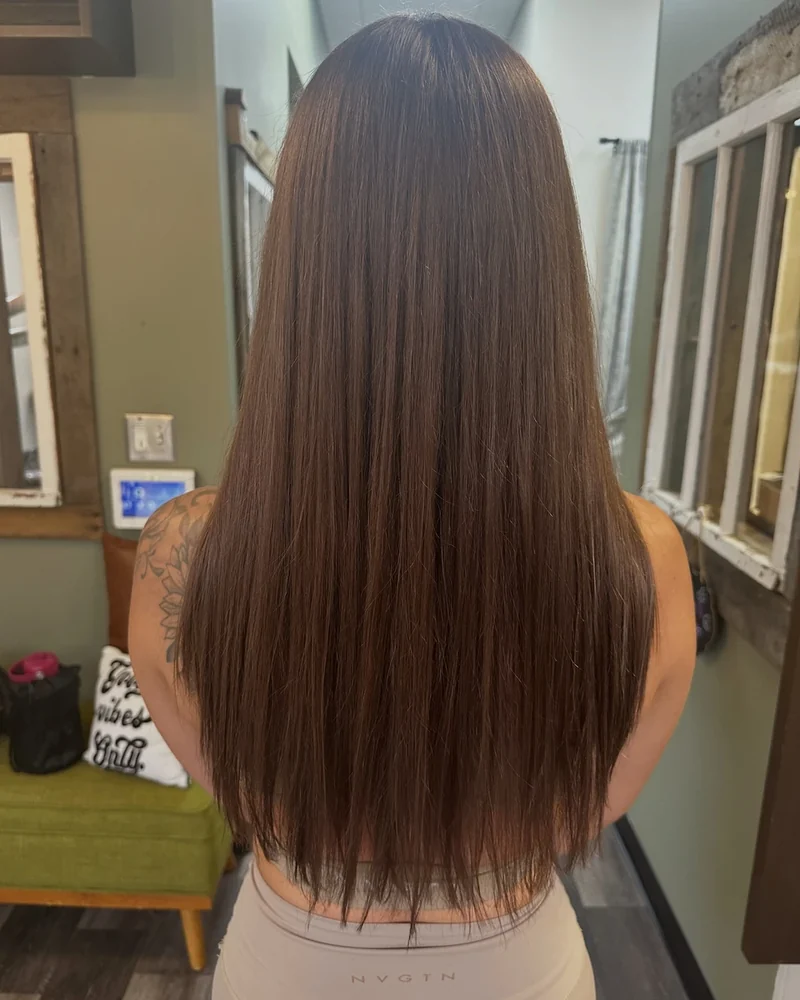
If you prefer a sleek blowout, your routine needs to support that styling method. An air-dry cream may give softness without the humidity resistance you expected. Conversely, a treatment requiring heat and tension may be inconvenient when you mostly air-dry.
You can also choose different goals on different days. A loose, comfortable style may suit an afternoon outdoors better than repeatedly ironing the same sections in pursuit of a perfectly flat silhouette. Pick a result you can maintain without constantly correcting it.
Understand the four product jobs
Think in jobs rather than bottle counts:
- Rinse-out conditioner supports softness and detangling after cleansing. Choose it around your texture and how the lengths feel.
- Leave-in conditioner stays on the hair to help with handling or softness. It is not automatically a strong hold product or humidity treatment.
- Styling product helps establish the finish: for example, a gel for definition or a mousse for a lighter styling feel. Follow that formula’s directions.
- Humidity-focused treatment is chosen for resistance to atmospheric moisture. Its application and drying method matter as much as its position in the routine.
One formula may cover more than one job. You do not need a separate purchase for every bullet. Start with what is missing from your current result, and check that your proposed combination is compatible. A manufacturer's specific layering instructions take precedence over a general “lightest to heaviest” rule.
A short routine for natural waves and curls
After washing, condition and detangle in a way that suits your texture. Apply one styling product according to its label and distribute it where you need definition. Let the hair settle into the shape you want instead of repeatedly combing it into a different one as it dries.
If your hair already feels soft and manageable, you may not need an additional leave-in. If it tangles, consider whether a suitable leave-in could replace another step. Keep notes about the amount used and the finished feel. “My roots collapsed but my ends still felt rough” is more useful than “this product did nothing.”
On fine waves, several creamy layers can make it difficult to judge which step is useful. Dense curls may need more careful sectioning for even distribution, rather than a much larger amount concentrated on the outside. Use the product's recommended application as your starting point.
A sleek routine: an exact Dream Coat example
Color Wow Dream Coat Supernatural Spray is an optional humidity-focused treatment in our shop for a sleek blow-dried finish. We are discussing the original Supernatural Spray, not Dream Coat for Curly Hair or Extra Strength Dream Coat.
The exact manufacturer's directions (opens in a new tab) call for shampooing and conditioning, then applying to damp, towel-dried hair. Divide into sections, thoroughly saturate the surfaces and underneath, and comb through. Blow-dry each section completely with brush tension to activate the treatment. Color Wow specifies medium-to-high dryer heat; that is a product requirement to consider before choosing it, particularly if you are minimizing heat on fragile hair.
The brand recommends using it alone before blow-drying, or with one of its Dream Cocktails applied first, and no additional products at that stage. Do not automatically stack several unrelated leave-ins beneath or above it. Color Wow says the effect lasts three to four shampoos; treat that as a manufacturer claim, not a promised result for every head of hair.
The brand's Dream Coat comparison (opens in a new tab) distinguishes formulas by texture and intended finish. The original is a poor match for someone seeking a no-heat, natural-curl routine. If you cannot comfortably perform the required blowout, choose a product intended for your method instead of adding extra flat-iron passes to force a result.
Good Vibes may earn a commission through the shop's partner purchasing links. The product is optional; a compatible routine and realistic styling goal come first.
The mistakes a smaller routine can prevent
Putting everything on the top layer leaves you uncertain about distribution. Divide the hair when the directions call for it. Applying more to compensate for the wrong drying method can waste product without addressing the problem.
Vigorously rubbing with a towel and repeatedly pulling a brush through tangles also work against comfortable handling. The AAD's styling guidance (opens in a new tab) recommends gentler drying and limiting heat exposure. On ordinary days, leave enough time to finish your chosen method instead of rushing through it and correcting the result several times.
Try a simple comparison across two similar wash days. Keep your cleanser, conditioner, and styling method consistent, then change only the amount of one styling product within its directions. Note softness, hold, movement, and how long the result feels practical. This is a personal routine check, not a controlled product trial.
Make room for the day you actually have
An outdoor lunch, a workout, and an indoor event may call for different expectations. Take a soft hair tie or clip if you expect to pull your hair back, and choose a comfortable style that does not tug. Avoid turning every weather change into another full heat-styling session.
For someone who wants an ongoing change to texture or styling effort, a professional smoothing consultation is a separate choice with its own suitability questions. It does not replace everyday care, and it is not required to wear your hair comfortably in humid weather.
If your goal is a professionally styled finish for a particular day, explore Haircuts & Styling and review the blowout option.
Sources & further reading
Sources checked October 15, 2026. Manufacturer information supports that brand’s directions and claims; it is not independent evidence of a result for your hair.
- Color Wow: Does humidity cause frizz? (opens in a new tab)
- Color Wow: Dream Coat Supernatural Spray (opens in a new tab)
- Color Wow: What is the right Dream Coat for your hair? (opens in a new tab)
- American Academy of Dermatology: How to stop damaging your hair (opens in a new tab)
- American Academy of Dermatology: Hair styling without damage (opens in a new tab)